
Proof & Practice is a health newsletter that bends with your life instead of breaking. Every Saturday, I share what the science says, the principle behind it, and the tools and skills to apply it your way — so your health habits finally stick. No perfection required. From a board-certified lifestyle medicine clinician.
Hello, my friends!
If you spend any time in wellness spaces, you've probably seen someone selling a gut health supplement. Probiotics. Prebiotics. Spore-based formulas. Mushroom blends.
A few have solid evidence. Most don't.
Meanwhile, one of the best-studied things you can do for your gut microbiome costs nothing extra and works with food you're already eating.
If you've been in the plant-based world for a while, you may have heard this one: eat 30 different plants a week.
It's good advice. But one thing usually gets left out.
Today we're covering 3 things:
What the research actually found.
What counts as a "different plant" (the answer is more generous than you think), and
Why the number is a tool, not a rule.
The study everyone cites, and what it actually says
The 30-plants figure comes from the American Gut Project, one of the largest citizen-science microbiome studies ever conducted, with over 10,000 participants.
The finding: people who ate more than 30 different types of plants per week had significantly greater gut microbial diversity than those who ate 10 or fewer.
That's a real finding from a large dataset. Worth taking seriously.
But this is what usually gets left out. It was an observational, cross-sectional study.
"30" wasn't a clinically derived recommendation, but a comparison group cutoff. Researchers needed a way to divide participants, and 30 became the line.
The broader literature supports a continuous relationship: more plant variety, more microbial diversity.
There's no threshold where your gut suddenly “unlocks.”
A 2022 study in the American Journal of Clinical Nutrition (Xiao et al.) confirmed this in two large Chinese cohorts. Dietary diversity was positively associated with gut microbial diversity and favorable metabolic profiles.
More variety, better outcomes. No magic number attached.
So: eat more different plants. Yes. Absolutely.
But the "30" figure is a rough benchmark, not a clinical rule. Keep that distinction in your back pocket.
Why gut diversity actually matters
Your gut microbiome isn't just about digestion. Research consistently links microbial diversity to:
Immune function
Inflammation levels
Metabolism and blood sugar regulation
Mood and brain health
Different plant foods contain different types of fiber, polyphenols, resistant starches, and prebiotics. Each feeds different strains of beneficial bacteria.
So when you eat the same 8 foods on rotation, even healthy ones, you're only feeding a limited slice of your gut ecosystem.
Think of it like a garden.
A diverse garden grows stronger, more resilient, more abundant. A garden with only one species is fragile. Your gut works the same way.
If you want a practical starting point, this earlier letter covers the seven foods worth building in first.

What actually counts as a "different plant"
This is where you underestimate yourself. Each of the following counts as a separate plant:
Fruits: apples, bananas, blueberries, avocado, mango
Vegetables: spinach, broccoli, carrots, sweet potato, onion, garlic, tomatoes
Whole grains: oats, brown rice, quinoa, corn, whole wheat
Legumes: lentils, chickpeas, black beans, tofu, tempeh
Nuts and seeds: almonds, walnuts, chia seeds, flaxseed, pumpkin seeds
Herbs and spices: turmeric, cumin, ginger, oregano, cinnamon, basil, parsley
That last category surprises people most. Herbs and spices count.
I found this out when I actually sat down and counted my own plants one week. I expected somewhere around 20, maybe 25. I stopped counting at 47!
How come? My husband cooks most of our meals.
He uses spices a lot, constantly, and in great variety. Garlic in almost everything. Turmeric, cumin, ginger, whatever's in the cabinet.
Back then, I had never thought to count any of it.
We weren't trying to hit 30. We were just cooking the way we normally cook, at least 90% plant-based, using what we had. The variety was already there.
You're probably closer than you think.
The trap perfectionism sets
The problem is, some people, perfectionists like myself, get stuck in it. We self-sabotage when we don't meet the 30 magic number.
And that's backwards.
Counting plants per week is a useful diagnostic tool. Temporary, but not permanent.
Use it to gather data and see where to improve. But it’s not meant to be a lifelong practice.
In the Dial Method, I talk about matching the intensity of your health habits to your current season. Detailed tracking is a Level 5 behavior: useful when life is calm and you're actively gathering data. Not something you run indefinitely, and not the measure of whether you're doing it right.
The principle is what travels with you across seasons. The tracking is just one method of applying it.
The principle that outlasts the number
Eat the rainbow.
I love this one.
Simple, memorable, and honestly more accurate than any specific number, because it points to the pattern, not the score.
The specifics will look different for different people based on location, availability, access, budget.
That's also a great reason to explore new recipes and cuisines regularly to keep healthy eating exciting.
For me, that's Korean food. Probably because I like to watch Korean dramas. 🤣
But bibimbap became a staple in our kitchen because it's exactly what this principle looks like in practice. It's my favorite. Colorful, versatile, and a reliable way to hit 8 to 10 plants in a single meal without trying.
I use tofu or tempeh instead of meat.

But most cuisines have a version of this: a dish that's naturally diverse, built around plants, and interesting enough to eat regularly.
Mediterranean grain bowls. Indian dal with multiple vegetables. Filipino pinakbet.
Find your version and let it do the heavy lifting.
The goal was always the plate, not the magic number.
So: track your plants once if you're curious. See where you land. You might surprise yourself the way I did.
But don't let the number become the thing. What’s important is the variety, color, and a diet built mostly around whole plant foods, practiced consistently, in whatever form fits your life and your kitchen.
Hit reply and tell me: what dish in your rotation naturally stacks up plant variety?
To your most colorful plate,
Grazelle 🌱
PERSONAL UPDATES
I'm back on YouTube. Posting more sporadically than regularly right now, but I've made peace with that. I've scaled down the production and editing to focus on what actually matters: the message.
Good enough and shipped beats perfect and sitting in my drafts folder. Check my latest video is below. I'd love to hear what you think.
MY FAVORITE FINDS
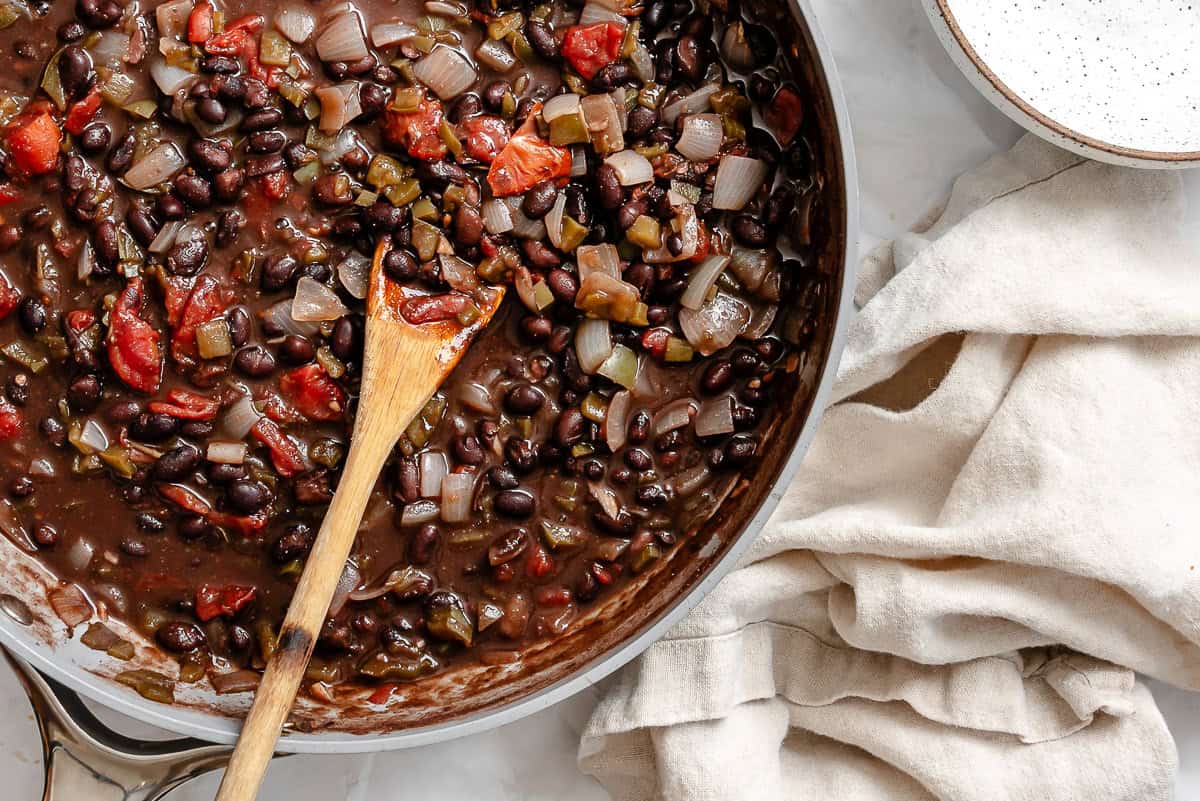
This is one of my favorite quick recipes. Lots of protein and fiber, and a solid way to stack your plant points.
BEFORE YOU GO
When you're ready, here are 2 ways I can help you:
1. The Dial Method — Get a consistency system that works on your worst weeks, not just your best ones. Five levels across five health pillars. Adjust instead of restart.
2. The Plant-Based Fast-Start for Busy Professionals — Get the no-perfection playbook for eating more plants without overhauling your life. Built for full schedules, not ideal weeks.